
Time Turner History Book Club

The Wingfield Heritage House Museum and the Ruidoso Library have partnered to host a history book club!
The Time Turner History Book Club meets on the second Thursday of each month. Join museum curator and manager Stephanie Long for an engaging journey through history as we explore diverse periods, cultures, and perspectives through the power of books.
Whether you’re a seasoned history buff or simply curious about the past, our club offers a welcoming space to dive into captivating narratives, spark insightful discussions, and connect with fellow history enthusiasts.
Details
WHEN:
Meetings are scheduled for the second Thursday of the month at 12:30 pm.
WHERE:
The Ruidoso Library Conference Room
HOW:
Read the monthly selection and attend the club meeting!
Light refreshments will be provided.
Need a copy of the book?
A limited number of copies of the selected book will be available for checkout at least a month before the meeting.
Patrons can also request an InterLibrary loan (allow up to 2 weeks for arrival).
Contact the library for more details:
Phone: 575-258-3704
Email: library@ruidoso-nm.gov
Questions?
Book Club
Contact: Amanda Castillo- Library Supervisor
Email: amandacastillo@ruidoso-nm.gov
Phone: 575.258.3704
Wingfield Heritage House Museum
Contact: Stephanie Long- Manager & Curator
Email: stephanielong@ruidoso-nm.gov
Phone: 575.257.5559
Upcoming Meetings & Book Selections
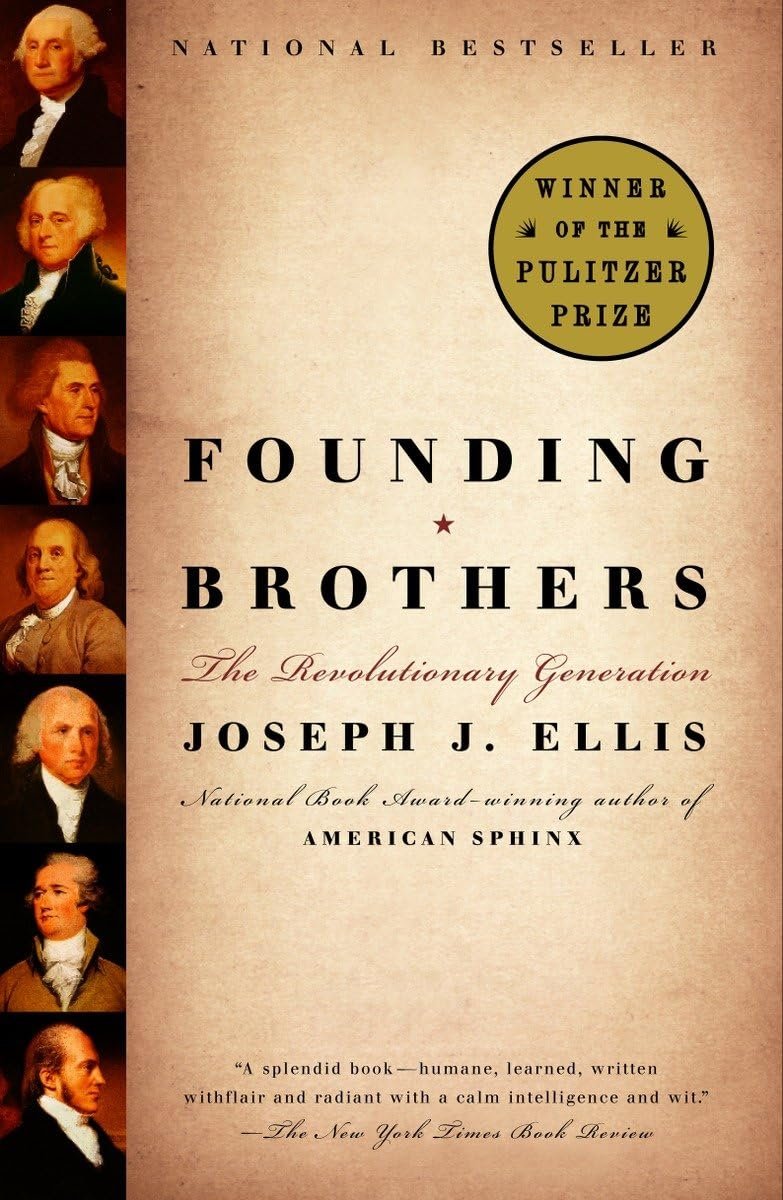
July Selection. Meeting July 9, 2026
Founding Brothers: The Revolutionary Generation
by Joseph J. Ellis
Experience the "most decisive decade" in American history through the lives of seven giants: Adams, Burr, Franklin, Hamilton, Jefferson, Madison, and Washington. Joseph J. Ellis’s Founding Brothers explores six pivotal moments—from the fatal Hamilton-Burr duel to the secret dinner that settled the nation’s capital—revealing that the survival of the fragile new republic depended less on legal documents and more on the intense, often clashing personalities of its leaders. This lively narrative peels back the public personas of these legendary figures to show how their private characters and personal relationships shaped the enduring vision of America.
📘 July 9, 2026 @ 12:30 pm → Founding Brothers: The Revolutionary Generation (Joseph J. Ellis)
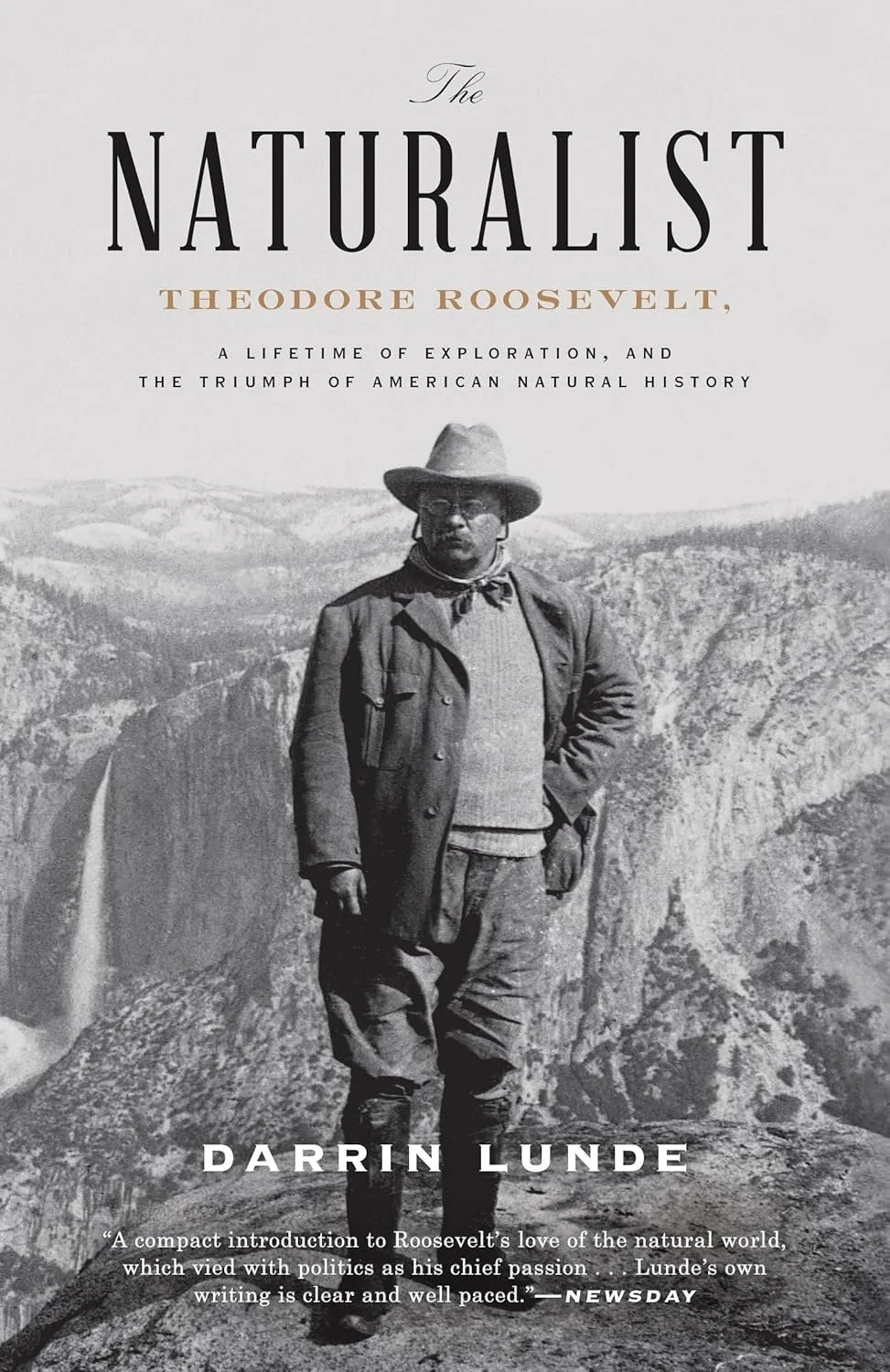
June Selection. Meeting June 11, 2026
The Naturalist: Theodore Roosevelt, A Lifetime of Exploration, and the Triumph of American Natural History
by Darrin Lunde
Discover the untold story of Theodore Roosevelt’s transformation from a curious boy collecting specimens to the "Naturalist-in-Chief" who sparked America’s conservation movement. In The Naturalist, Darrin Lunde explores how Roosevelt’s obsession with biology and his mentorship under pioneer museum scientists shaped his presidency and his mission to preserve the wild. Drawing from Roosevelt's own diaries and expedition journals, this insightful history reveals how a lifelong passion for the natural world redefined the American wilderness for generations to come.
📘 June 11, 2026 @ 12:30 pm → The Naturalist: Theodore Roosevelt, A Lifetime of Exploration, and the Triumph of American Natural History (Darrin Lunde)
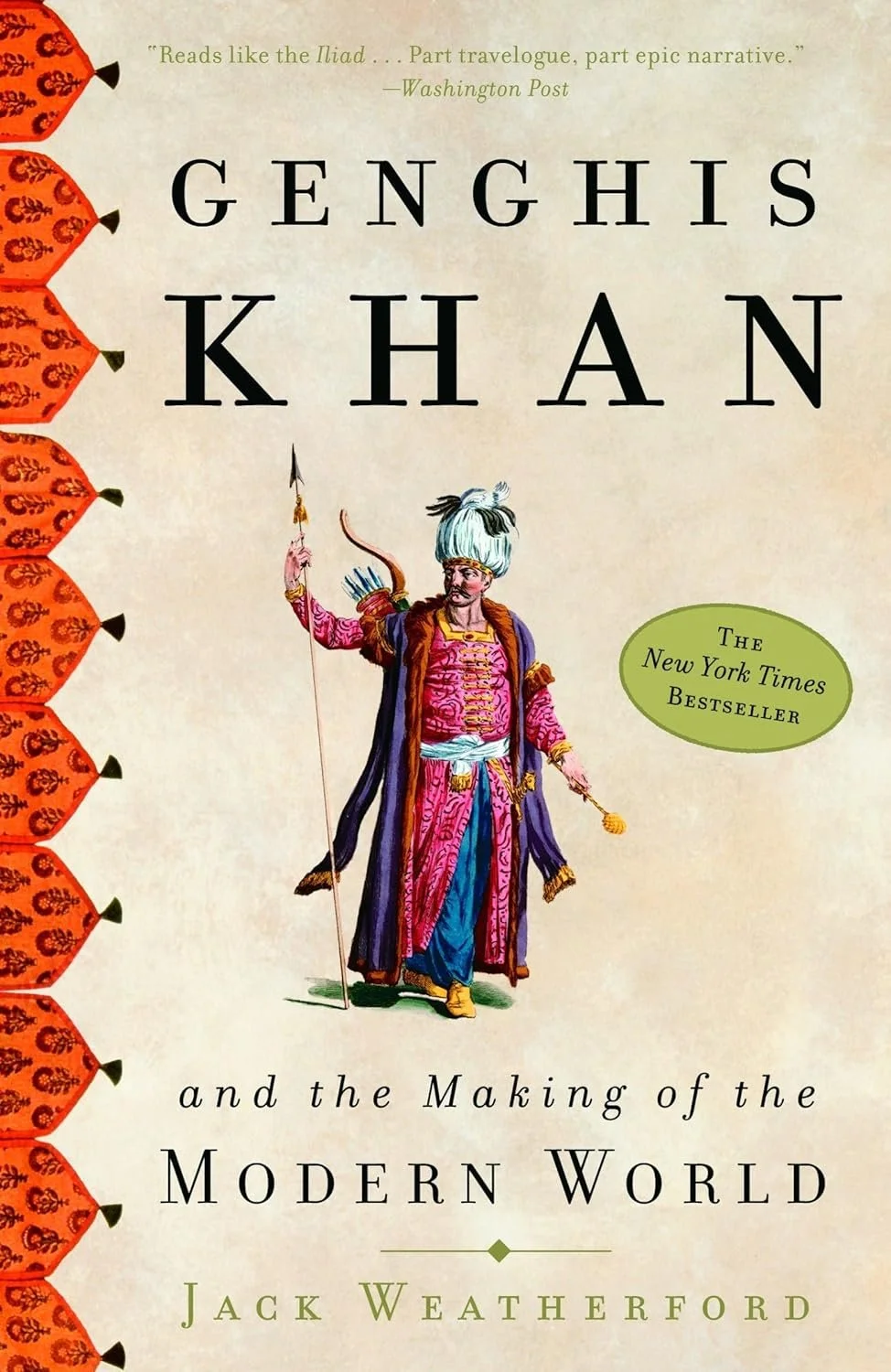
May Selection. Meeting May 14, 2026
Genghis Khan and the Making of the Modern World
by Jack Weatherford
Jack Weatherford’s Genghis Khan and the Making of the Modern World provides a groundbreaking perspective on the Mongol Empire, challenging centuries of Western stereotypes that painted the Great Khan as a mere barbarian. Weatherford reveals a sophisticated leader who pioneered revolutionary concepts such as religious freedom, international commerce, and a merit-based social structure. By tracing the Mongol influence from the steppes of Central Asia to the foundations of the Renaissance, this narrative demonstrates how Genghis Khan’s conquests shattered the feudal systems of the Middle Ages and paved the way for the globalized modern era. It is a gripping historical revision that transforms our understanding of how the world was actually built.
—Provided by the publisher.
📘 May 14, 2026 @ 12:30 pm → Genghis Khan and the Making of the Modern World (Jack Weatherford)
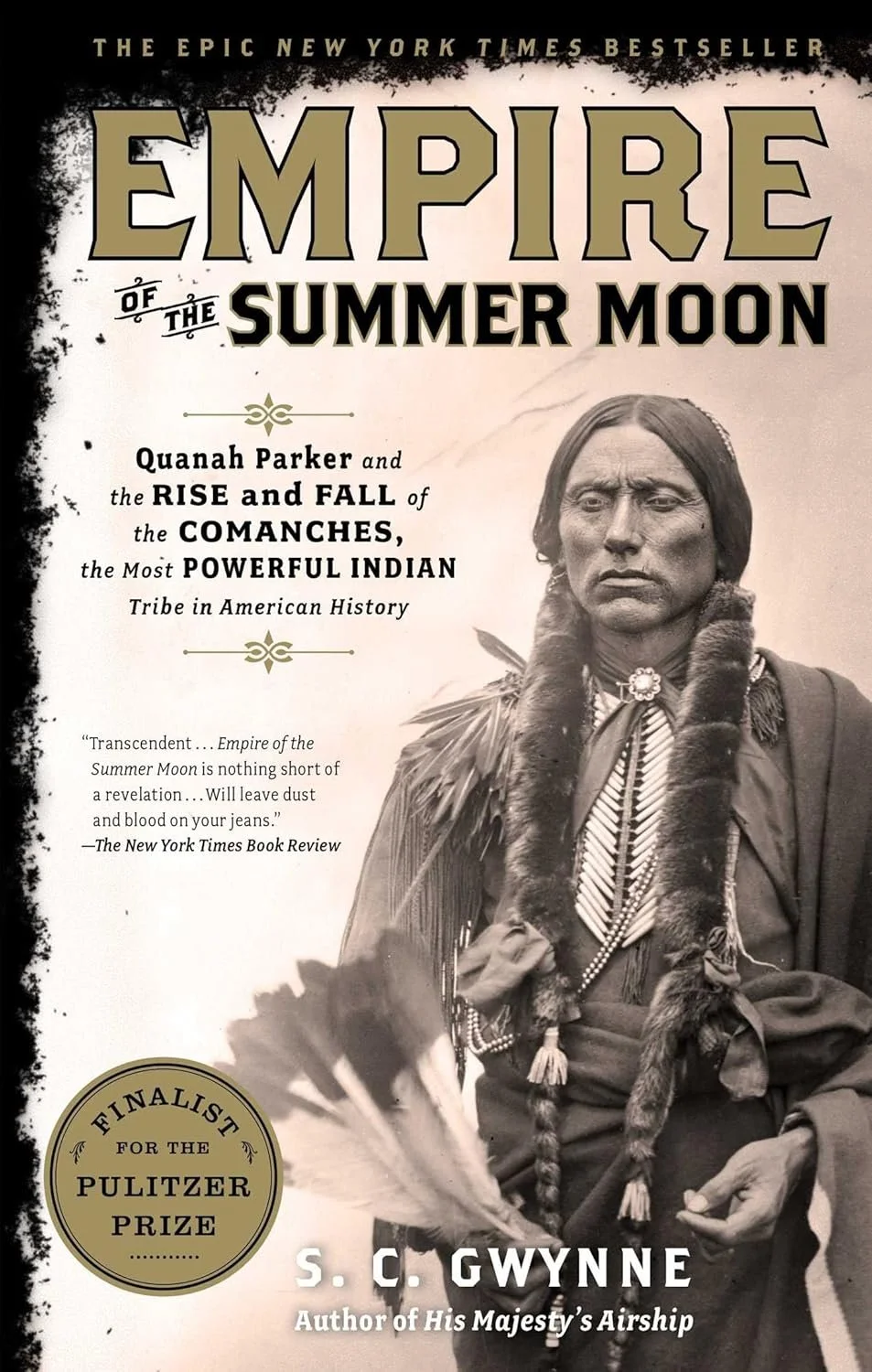
April Selection. Meeting April 9, 2026
Empire of the Summer Moon
by S.C. Gwynne
S.C. Gwynne’s Empire of the Summer Moon offers a stunning historical account of the forty-year struggle between the Comanche Indians and white settlers for control of the American West. At the center of this sweeping narrative is the rise and fall of the Comanches, the most powerful Indian tribe in American history, and the incredible true story of Quanah Parker, the legendary warrior chief. By weaving together the brutal reality of frontier life with the intimate story of Quanah’s mother, Cynthia Ann Parker, Gwynne creates an epic and unforgettable portrait of the vanishing West that is as informative as it is deeply moving.
—Provided by the publisher.
📘 April 9, 2026 @ 12:30 pm → Empire of the Summer Moon (S.C. Gwynne)

March Selection. Meeting March 12, 2026
The Manhattan Project Trinity Test: Witnessing the Bomb in New Mexico
by Elva K. Österreich
At 5:29 a.m. on July 16, 1945, the Trinity Test explosion of the first atomic bomb changed the world forever. The dropping of the bombs on Hiroshima and Nagasaki in Japan followed soon after, but it was the first blast in what is now known as White Sands Missile Range that marked the beginning of the end of World War II. In southern New Mexico, although the Manhattan Project was still top secret, everyday people witnessed the test, experienced its light and power, felt the earth move and knew the world had changed. Author Elva K. Österreich shares the stories of their experience and how their lives were transformed.
—Provided by the publisher.
📘 March 12, 2026 @ 12:30 pm → The Manhattan Project Trinity Test (Elva K. Österreich)
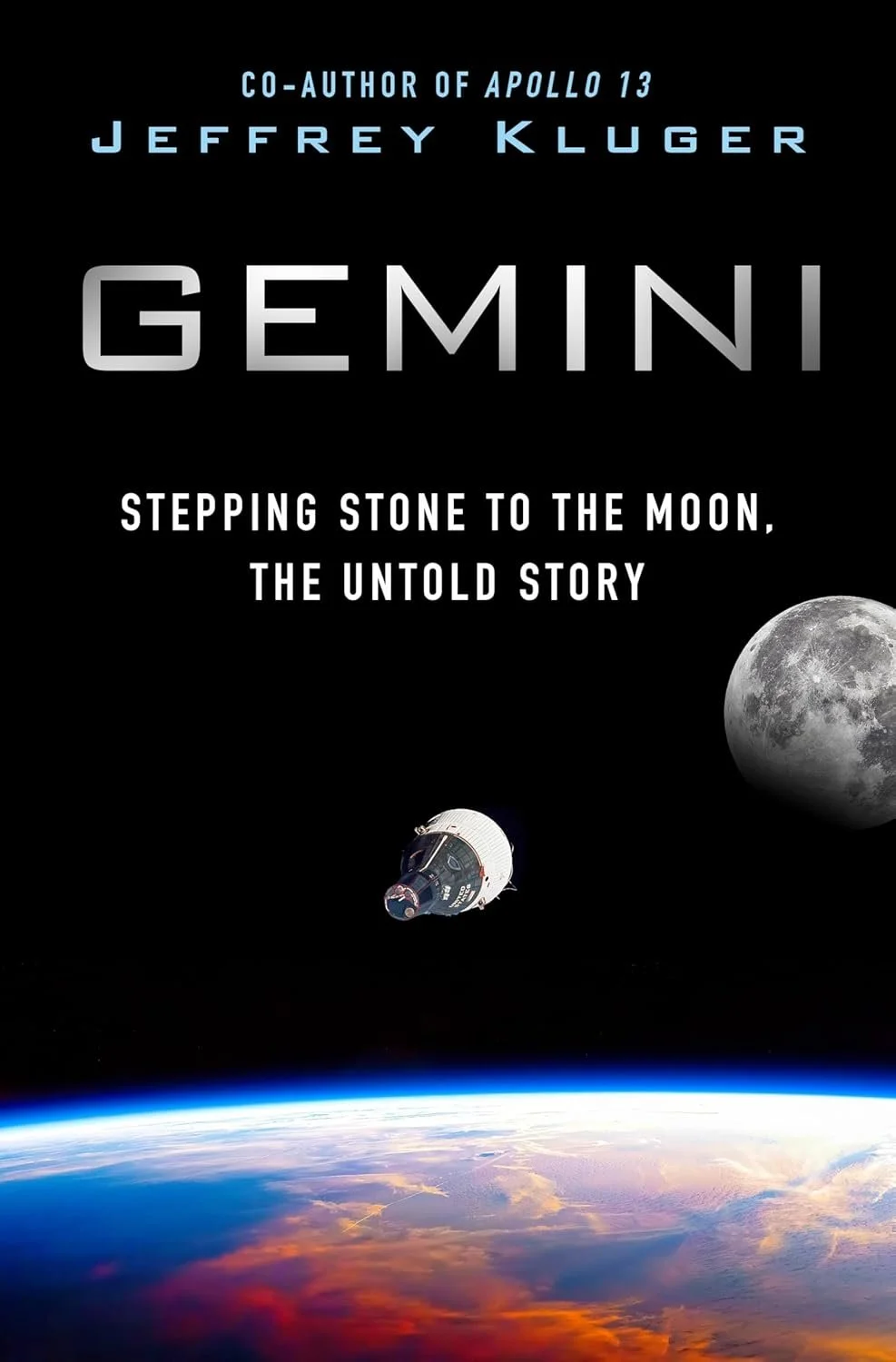
February Selection. Meeting Feb. 12, 2026
Gemini: Stepping Stone to the Moon, the Untold Story
by Jeffrey Kluger
Without Gemini, there would be no Apollo.
After we first launched Americans into space but before we touched down on the moon’s surface, there was the Gemini program. It was no easy jump from manned missions in low-Earth orbit to a successful moon landing, and the ten-flight, twenty-month celestial story of the Gemini program is an extraordinary one. There was unavoidable darkness in the program―the deaths and near-deaths that defined it, and the blood feud with the Soviet Union that animated it.
But there were undeniable and previously inconceivable successes. With a war raging in Vietnam and lawmakers calling for cuts to NASA’s budget, the success of the Gemini program―or the space program in general―was never guaranteed. Yet against all odds, the remarkable scientists and astronauts behind the project persevered, and their efforts paid off. Later, with the knowledge gained from the Gemini flights, NASA would launch the legendary Apollo program.
Told with Jeffrey Kluger’s signature cinematic storytelling and in-depth research and interviews, Gemini is an edge-of-your-seat narrative chronicling the history of the least appreciated―and most groundbreaking―space program in American history. Finally, Gemini’s story will be told, and finally, we’ll learn the truth of how we landed on the moon.
—Provided by the publisher.
📘 February 12, 2026 @ 12:30 pm → Gemini (Jeffrey Kluger)
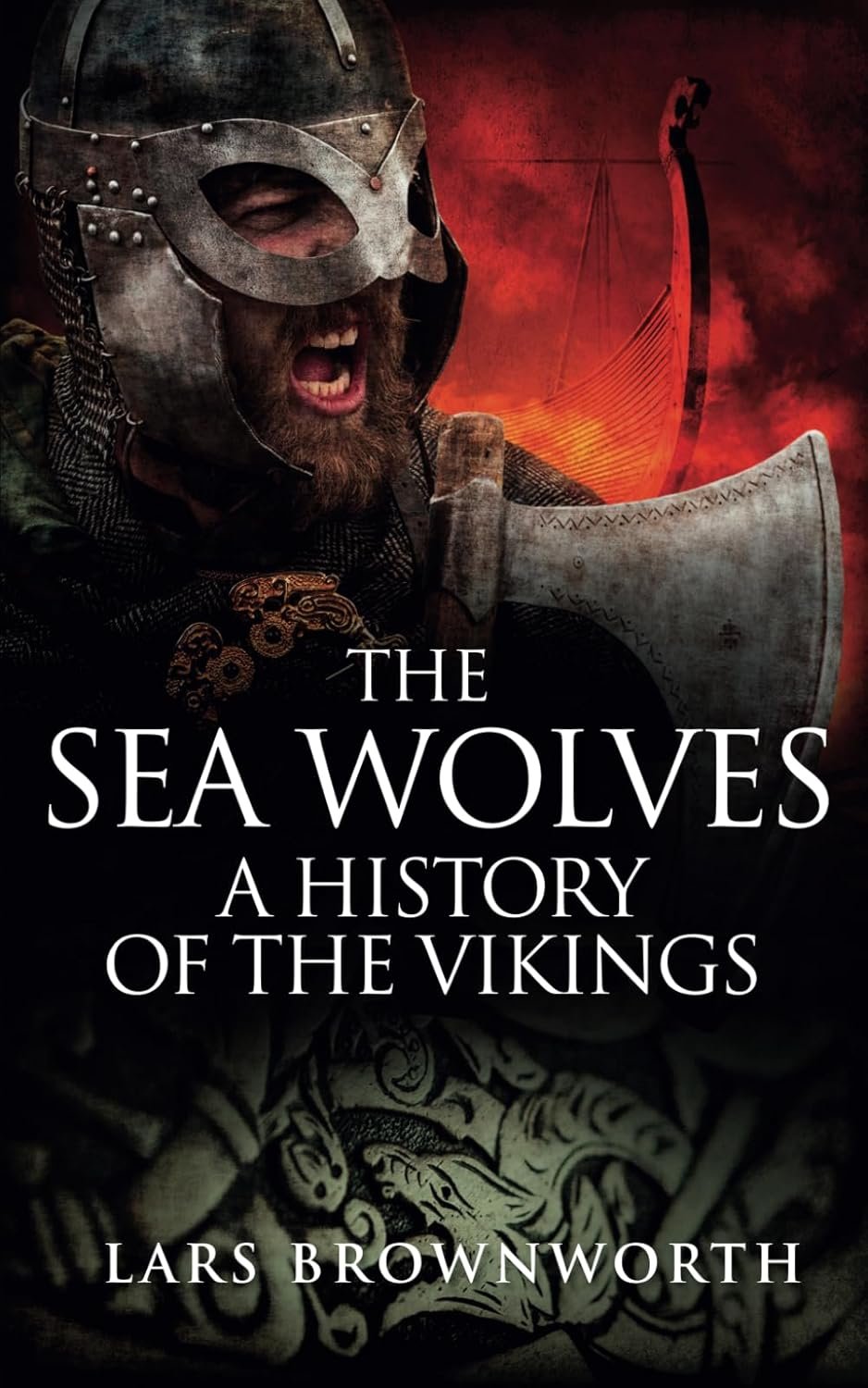
January Selection. Meeting Jan. 15, 2026
The Sea Wolves: A History of the Vikings
by Lars Brownworth
In AD 793 Norse warriors struck the English isle of Lindisfarne and laid waste to it. Wave after wave of Norse ‘sea-wolves’ followed in search of plunder, land, or a glorious death in battle. Much of the British Isles fell before their swords, and the continental capitals of Paris and Aachen were sacked in turn. Turning east, they swept down the uncharted rivers of central Europe, captured Kiev and clashed with mighty Constantinople, the capital of the Byzantine Empire.
But there is more to the Viking story than brute force. They were makers of law - the term itself comes from an Old Norse word - and they introduced a novel form of trial by jury to England. They were also sophisticated merchants and explorers who settled Iceland, founded Dublin, and established a trading network that stretched from Baghdad to the coast of North America.
In The Sea Wolves, Lars Brownworth brings to life this extraordinary Norse world of epic poets, heroes, and travellers through the stories of the great Viking figures. Among others, Leif the Lucky who discovered a new world, Ragnar Lodbrok the scourge of France, Eric Bloodaxe who ruled in York, and the crafty Harald Hardrada illuminate the saga of the Viking age - a time which “has passed away, and grown dark under the cover of night”.
—Provided by the publisher.
📘 January 15, 2026 @ 12:30 pm → El Norte (Carrie Gibson)
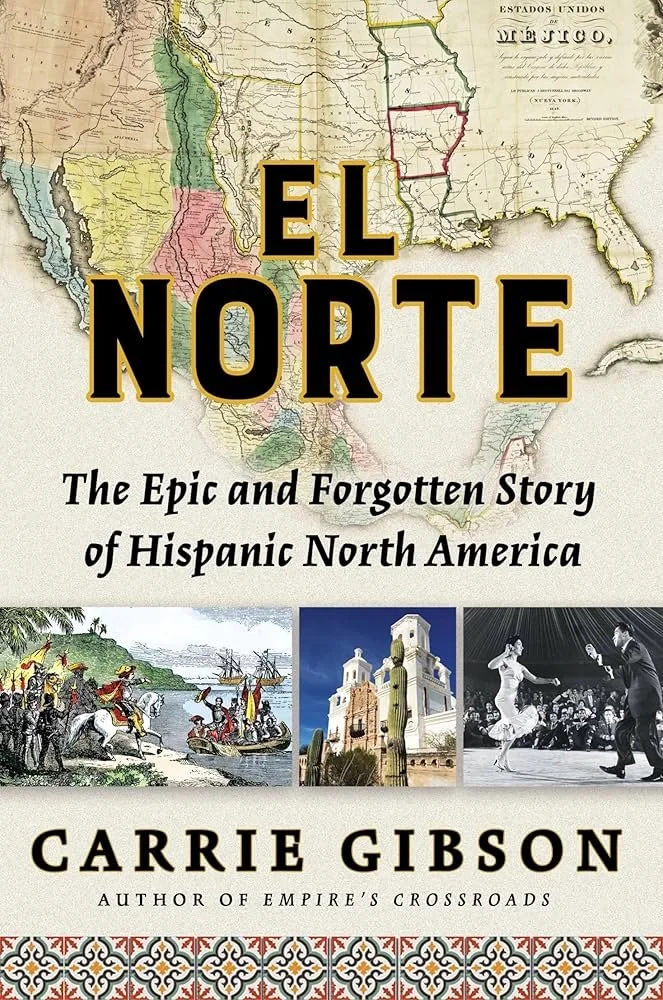
November Selection. Meeting Nov. 20, 2025 [Previously Nov. 13]
El Norte: The Epic and Forgotten Story of Hispanic America
By Carrie Gibson
El Norte chronicles the sweeping and dramatic history of Hispanic North America from the arrival of the Spanish in the early 16th century to the present―from Ponce de Leon’s initial landing in Florida in 1513 to Spanish control of the vast Louisiana territory in 1762 to the Mexican-American War in 1846 and up to the more recent tragedy of post-hurricane Puerto Rico and the ongoing border acrimony with Mexico.
Interwoven in this stirring narrative of events and people are cultural issues that have been present from the start and remain unresolved to this day: language, belonging, community, race, and nationality.
Seeing them play out over centuries provides vital perspective at a time when it is urgently needed.
—Provided by the publisher.
📘 November 20, 2025 @ 12:30 pm → El Norte (Carrie Gibson)
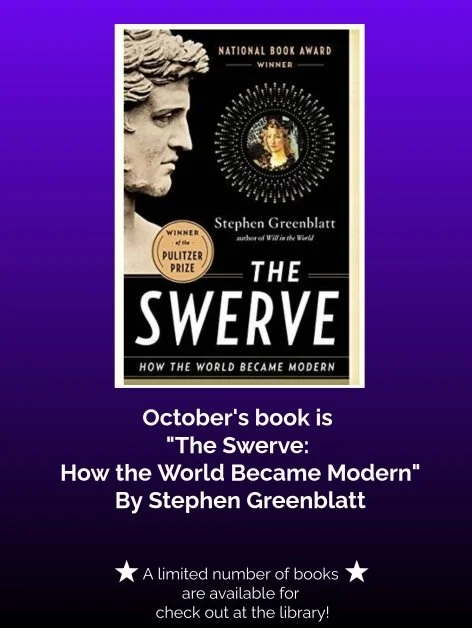
OCTOBER SELECTION. MEETING 10/09/25
The Swerve: How the World Became Modern
By Stephen Greenblatt
Greenblatt's Pulitzer Prize-winning book, The Swerve: How the World Became Modern tells the story of Poggio Bracciolini's 1417 rediscovery of Lucretius's lost ancient poem, “On the Nature of Things”, and its subsequent influence in sparking the Renaissance and shaping the modern world. The poem contained radical Epicurean ideas—that the universe is made of atoms, gods are indifferent, and true happiness is found in this life—which challenged medieval religious dogma and contributed to new perspectives on science, humanism, and pleasure.”—jddavispoet.com
📘 October 9, 2025 @ 12:30 pm → The Swerve (Stephen Greenblatt)
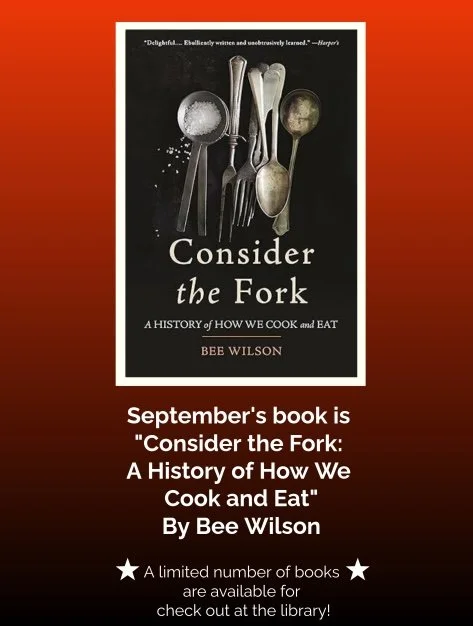
SEPTEMBER SELECTION: MEETING 9/11/25
Consider the Fork: A History of How We Cook and Eat
By Bee Wilson
In Consider the Fork, award-winning food writer Bee Wilson explores the surprising history of everyday kitchen tools—from knives, spoons, and chopsticks to skillets and whisks. With wit and insight, she shows how these inventions not only changed the way we cook but also shaped cultures, tastes, and the very way we think about food.
📕 September 11, 2025 @ 12:30 pm → Consider the Fork (Bee Wilson)


